¿Por qué el techo es la decisión más importante de tu obra?
El techo es el único elemento que protege a toda la construcción de la lluvia, el viento, el sol y el frío. Un mal techo —mal diseñado, mal ejecutado o con materiales inadecuados— puede deteriorar en pocos años lo que se tardó meses en construir. La humedad que ingresa por una cubierta deficiente daña estructuras de hormigón, arruina terminaciones, genera hongos y puede comprometer la habitabilidad de toda la vivienda.
Por eso, el techo no es un lugar donde recortar costos. Representa entre el 15 y el 25% del presupuesto total de una construcción residencial estándar, y es la inversión que más rentabilidad de largo plazo ofrece cuando se hace bien. Un techo de tejas cerámicas bien construido puede durar 50 años sin intervenciones mayores; uno de chapa sin aislación ni mantenimiento puede fallar en 10.
En esta guía analizamos todos los tipos de techo por forma y por material, con costos orientativos, ventajas, desventajas y recomendaciones según zona climática y tipo de proyecto.
Tipos de techo por geometría
La forma del techo no es solo una decisión estética: afecta la capacidad de evacuación del agua, la resistencia al viento, la posibilidad de aprovechar el espacio interior y el costo de la estructura. Estos son los principales tipos:
Techo a dos aguas (gabled roof)
Es el techo más común en viviendas de Latinoamérica y el mundo. Consiste en dos planos inclinados que se unen en una cumbrera central, formando una "V" invertida vista de frente. Es simple de calcular, fácil de construir y muy eficiente para evacuar el agua de lluvia.
- Ventaja principal: crea un espacio bajo cubierta aprovechable como altillo o entretecho para instalaciones.
- Pendiente típica: 25–45%
- Multiplicador de costo de estructura: 1.0x (base de referencia)
- Ideal para: viviendas unifamiliares, climas con lluvias, zonas con nieve.
Techo a cuatro aguas (hip roof)
El techo a cuatro aguas tiene cuatro planos inclinados que convergen hacia la cumbrera. No tiene frentes triangulares (frontones) expuestos, lo que le da mayor resistencia al viento lateral y una apariencia más compacta y elegante. Es frecuente en chalets y viviendas de estilo clásico.
- Ventaja principal: excelente resistencia al viento en los cuatro lados.
- Desventaja: estructura más compleja, con más diagonales y uniones. Mayor costo.
- Multiplicador de costo: 1.2x respecto al techo a dos aguas.
- Ideal para: zonas costeras o con vientos fuertes, construcciones premium.
Techo plano o azotea
El techo plano tiene una inclinación mínima (1–5%) para drenar el agua, pero visualmente es horizontal. Permite su uso como terraza, jardín o superficie para instalación de equipos. Es el techo de referencia en arquitectura moderna y en edificios de departamentos.
- Ventaja principal: aprovechable como espacio exterior habitable.
- Desventaja crítica: requiere impermeabilización impecable y mantenimiento periódico. Una falla en la membrana genera filtraciones difíciles de localizar.
- Multiplicador de costo: 0.9x en estructura, pero 1.3x cuando se incluye la impermeabilización de calidad.
- Ideal para: edificios, viviendas de diseño moderno, zonas con pocas lluvias.
Techo a un agua (shed roof / lean-to)
Un único plano inclinado que drena en una sola dirección. Da una estética industrial o contemporánea muy buscada hoy. Permite colocar ventanas altas (clerestory) en la pared más elevada, generando excelente ventilación e iluminación natural.
- Ventaja principal: simple, económico, ideal para paneles solares alineados al norte.
- Desventaja: la pared alta queda más expuesta a lluvias y viento. Requiere buena evacuación en la canaleta baja.
- Multiplicador de costo: 0.85x
- Ideal para: ampliaciones, galpones, viviendas industriales, zonas con pocas lluvias.
Techo mansarda
De origen francés, el techo mansarda tiene dos planos en cada lado: uno muy inclinado en la parte baja (casi vertical) y uno suave en la parte superior. Esto maximiza el espacio interior del último nivel, convirtiendo lo que sería un entretecho bajo en un piso completo habitable.
- Ventaja principal: gana espacio interior sin aumentar la altura aparente del edificio.
- Desventaja: es el techo más costoso y complejo de ejecutar correctamente.
- Multiplicador de costo: 1.4x o más.
- Ideal para: zonas con límite de altura, edificios de carácter clásico o europeo.
Techo butterfly / mariposa
Forma una "V" —el opuesto al techo a dos aguas. Los planos inclinados descienden hacia el centro, donde se encuentra la canaleta principal. Es una propuesta arquitectónica muy contemporánea que permite aberturas altas en los frentes y recolección centralizada de agua de lluvia. Requiere un sistema de desagüe central muy confiable.
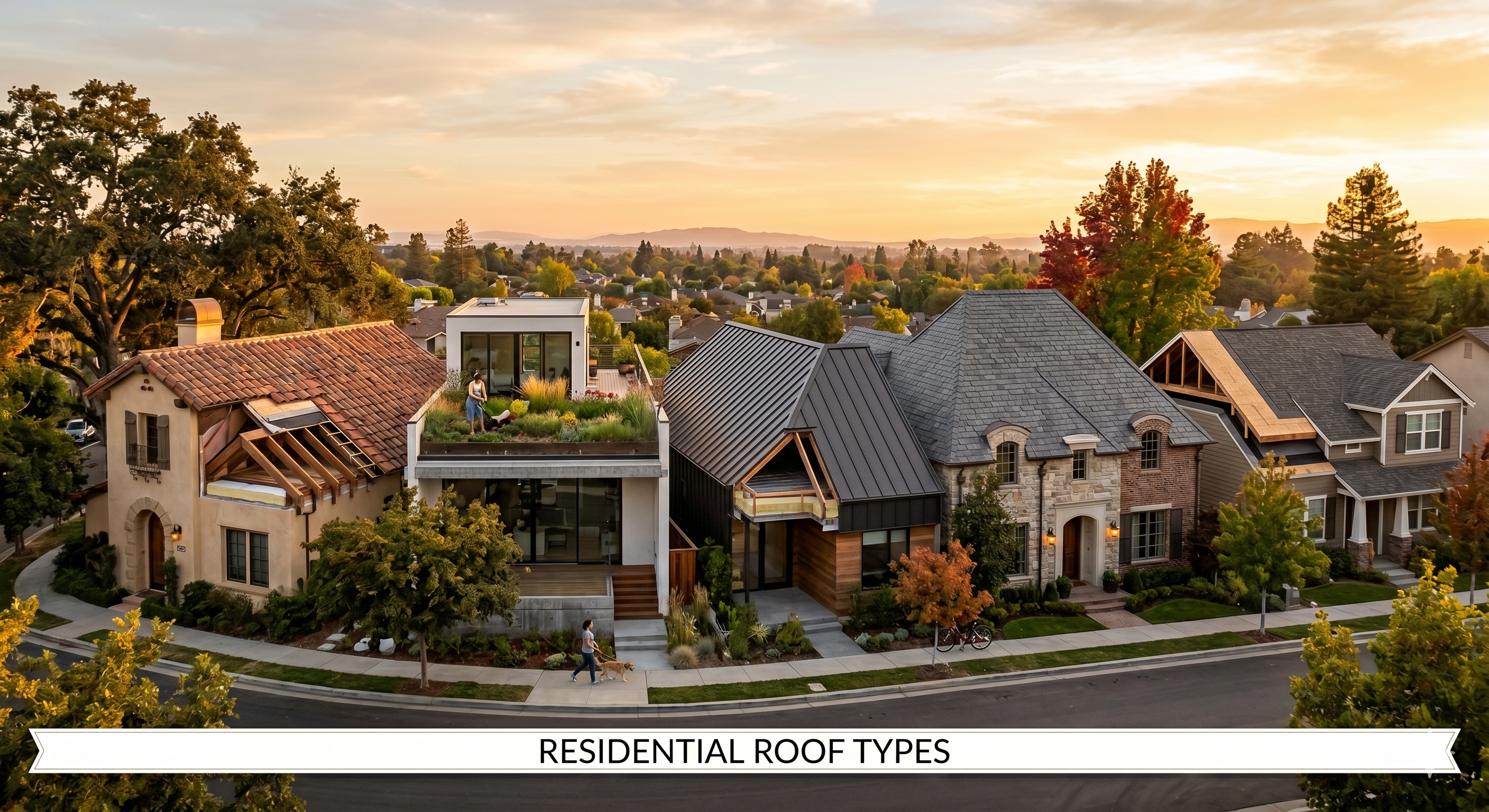
Materiales de cubierta: el elemento que ves y el que te protege
La elección del material de cubierta es tan importante como la forma del techo. Define la estética exterior, el peso sobre la estructura, la vida útil, la aislación y el presupuesto de mantenimiento a lo largo de los años.
Tejas cerámicas
Son el material de cubierta más tradicional en Argentina, Uruguay, Brasil y gran parte de Latinoamérica. Se fabrican en arcilla cocida en distintos formatos: romana, española, francesa y plana. Su aspecto cálido y natural es difícil de igualar con materiales modernos.
- Precio: $20–40/m²
- Vida útil: 30–50 años con mantenimiento básico
- Peso: 40–55 kg/m² (requiere estructura resistente)
- Aislación térmica: buena por masa térmica
- Mantenimiento: limpieza periódica de líquenes; reposición de piezas rotas
Tejas de hormigón
Son más baratas que las cerámicas y de aspecto similar, pero son más pesadas y tienen menor capacidad de "respirar". Se fabrican en varios colores y formatos. Son buena opción cuando se busca el aspecto de teja a menor costo.
- Precio: $15–30/m²
- Vida útil: 20–40 años
- Peso: 45–60 kg/m² (más pesadas que las cerámicas)
- Aislación: similar a cerámica
Chapa de acero o zinc ondulada
Es el material de cubierta más económico y el más usado en construcciones rurales, industriales y en sectores populares de toda América Latina. Se instala rápidamente y no requiere estructura elaborada. Su principal problema es la falta de aislación: genera mucho calor en verano y mucho frío en invierno si no se agrega aislación por debajo.
- Precio: $8–20/m² (varía enormemente según espesor y calidad)
- Vida útil: 15–25 años (depende del espesor y de la agresividad del ambiente)
- Peso: 4–8 kg/m²
- Aislación térmica: muy baja sin aislación adicional
- Mantenimiento: pintura anticorrosiva cada 5–7 años en zonas húmedas
Chapa sándwich / isopanel de techo
Versión mejorada de la chapa simple: dos chapas de acero con núcleo de espuma EPS o PIR entre ellas. Combina la velocidad de instalación de la chapa con aislación térmica integrada. Es el estándar en edificios industriales modernos y cada vez más usado en viviendas de diseño contemporáneo.
- Precio: $25–55/m²
- Vida útil: 25–35 años
- Peso: 10–15 kg/m²
- Aislación: muy alta (R-3.5 en 100 mm PIR)
Membrana asfáltica (para techos planos)
Indispensable en techos planos y azoteas. Se aplica en capas sobre la losa de hormigón, fundida con soplete o autoadhesiva. Existen membranas de APP (polipropileno atáctico) y SBS (estireno-butadieno-estireno), siendo estas últimas más flexibles y resistentes en climas extremos.
- Precio: $12–25/m² (mano de obra incluida)
- Vida útil: 10–15 años (requiere revisión y en muchos casos renovación)
- Mantenimiento: inspección anual, especialmente en uniones y bordes
- Recomendación: usar membrana de al menos 4 mm de espesor y cubrir con gravilla o baldosa protegida
Tejas asfálticas (shingles)
Muy comunes en Estados Unidos, México y Chile. Son placas multicapa de asfalto reforzado con fibra de vidrio y cubiertas de granulado mineral. Son livianas, flexibles y fáciles de cortar, lo que las hace ideales para techos de formas complejas.
- Precio: $18–35/m²
- Vida útil: 20–30 años
- Peso: 10–14 kg/m²
- Aislación: moderada
Techo verde / ecológico
El techo verde es una cubierta viva: sustrato vegetal con plantas adaptadas al entorno. Ofrece el mayor rendimiento de aislación térmica de todos los sistemas, además de gestionar el agua de lluvia (retención y evapotranspiración), reducir el efecto de isla de calor urbana y generar biodiversidad. Su costo es alto y requiere diseño profesional, impermeabilización reforzada y estructura adicional para soportar el peso del sustrato saturado.
- Precio: $80–200/m² (extensivo) a más de $300/m² (intensivo con jardín)
- Vida útil de la membrana: 40–50 años (protegida por el sustrato)
- Peso: 80–150 kg/m² en techos extensivos; más en intensivos
Teja de pizarra
La pizarra natural es el material de cubierta de mayor durabilidad y el de mayor prestigio arquitectónico. Se usa en construcciones de alta gama, restauraciones patrimoniales y regiones de tradición montañesa (norte de España, sur de Chile). Su peso y costo son los más altos del mercado.
- Precio: $60–150/m²
- Vida útil: 50–100 años
- Peso: 25–35 kg/m²
- Mantenimiento: mínimo; eventual reposición de piezas rotas
Comparativa de materiales de cubierta
| Material | Precio/m² | Vida útil | Peso | Aislamiento | Mantenimiento | Estética |
|---|---|---|---|---|---|---|
| Teja cerámica | $20–40 | 30–50 años | Alto | Bueno | Bajo | Tradicional / Premium |
| Teja hormigón | $15–30 | 20–40 años | Muy alto | Bueno | Bajo | Similar cerámica |
| Chapa acero/zinc | $8–20 | 15–25 años | Muy bajo | Muy bajo | Medio | Industrial |
| Chapa sándwich | $25–55 | 25–35 años | Bajo | Muy alto | Bajo | Moderno / Industrial |
| Membrana asfáltica | $12–25 | 10–15 años | Muy bajo | Bajo | Alto | No visible |
| Shingles | $18–35 | 20–30 años | Bajo | Moderado | Bajo | Contemporáneo |
| Techo verde | $80–200 | 40–50 años | Muy alto | Excelente | Alto | Ecológico / Único |
| Pizarra natural | $60–150 | 50–100 años | Medio-alto | Bueno | Muy bajo | Premium / Histórico |
La estructura del techo: lo que no se ve y lo que todo soporta
Debajo de la cubierta visible hay una estructura que transmite todas las cargas —peso propio, lluvia, nieve, viento, mantenimiento— a las paredes o vigas del edificio. Elegir mal la estructura puede resultar en flechas (deformación), goteras por movimientos o, en el peor caso, colapso parcial.
Las opciones estructurales principales son:
- Estructura de madera: las vigas, tijeras y correas de madera son el sistema más tradicional y aún muy usado. Son económicas, fáciles de trabajar y tienen buen rendimiento térmico. La desventaja es la susceptibilidad a la humedad y los insectos si no están bien tratadas.
- Estructura metálica (steel framing o perfilería pesada): más liviana, precisa y resistente al fuego que la madera. Se usa en techos industriales y en viviendas de steel framing donde toda la estructura es metálica.
- Vigas prefabricadas de hormigón: losas premoldeadas o vigas T invertidas. Son la base estructural en techos planos de edificios.
Proceso de construcción de una cubierta
-
Cálculo de carga y pendiente
Un profesional calcula las cargas permanentes (peso propio de la estructura y cubierta) y las cargas variables (lluvia, nieve, mantenimiento). A partir de eso se dimensionan las vigas y la pendiente mínima según el material elegido.
-
Armado de la estructura portante
Se colocan las vigas principales (cabriadas o tijeras) sobre las paredes o pilares. Luego se instalan las correas perpendiculares que servirán de soporte a la cubierta.
-
Colocación de la aislación
Antes o después de la cubierta exterior, según el sistema, se instala la aislación térmica: planchas de poliestireno expandido, lana mineral o membranas reflectivas. Es el paso que define el confort térmico del espacio interior.
-
Cubierta exterior
Se coloca el material de cubierta elegido (tejas, chapas, membrana) siguiendo las instrucciones del fabricante para solapes, fijaciones y sellados. La calidad de la ejecución en esta etapa define si el techo dura 15 o 50 años.
-
Canaletas y sistema de desagüe
Se instalan las canaletas perimetrales y los caños de bajada. Un sistema de desagüe correctamente dimensionado evita que el agua se acumule y presione los bordes del techo o infiltre por los cimientos.
La pendiente: un número que lo cambia todo
La pendiente del techo —expresada en porcentaje o grados— determina la velocidad con que el agua abandona la superficie. Una pendiente incorrecta para el material elegido es una de las causas más frecuentes de goteras, especialmente en zonas con lluvias intensas.
Las pendientes mínimas recomendadas según material son:
- Membrana asfáltica: mínimo 2% (2 cm de caída cada 1 metro)
- Chapa ondulada: mínimo 5–10% (chapa trapezoidal desde 3%)
- Shingles asfálticos: mínimo 18–20%
- Tejas cerámicas o de hormigón: mínimo 30–35%
- Pizarra: mínimo 25–30% (varía según el solape)
En zonas de lluvia intensa o con riesgo de nieve, usá siempre una pendiente mayor a la mínima recomendada. Una pendiente del 35–40% para tejas cerámicas evacua el agua mucho más eficientemente que el mínimo del 30% y reduce enormemente la probabilidad de filtración en tormentas fuertes. El costo estructural adicional por una mayor pendiente es bajo comparado con el costo de reparar una gotera crónica.
Por otro lado, las pendientes muy elevadas (más del 60%) también tienen desventajas: mayor exposición al viento, mayor costo de materiales por el aumento de superficie real y mayor riesgo en las tareas de mantenimiento. El punto óptimo para la mayoría de los materiales es entre 35 y 50%.
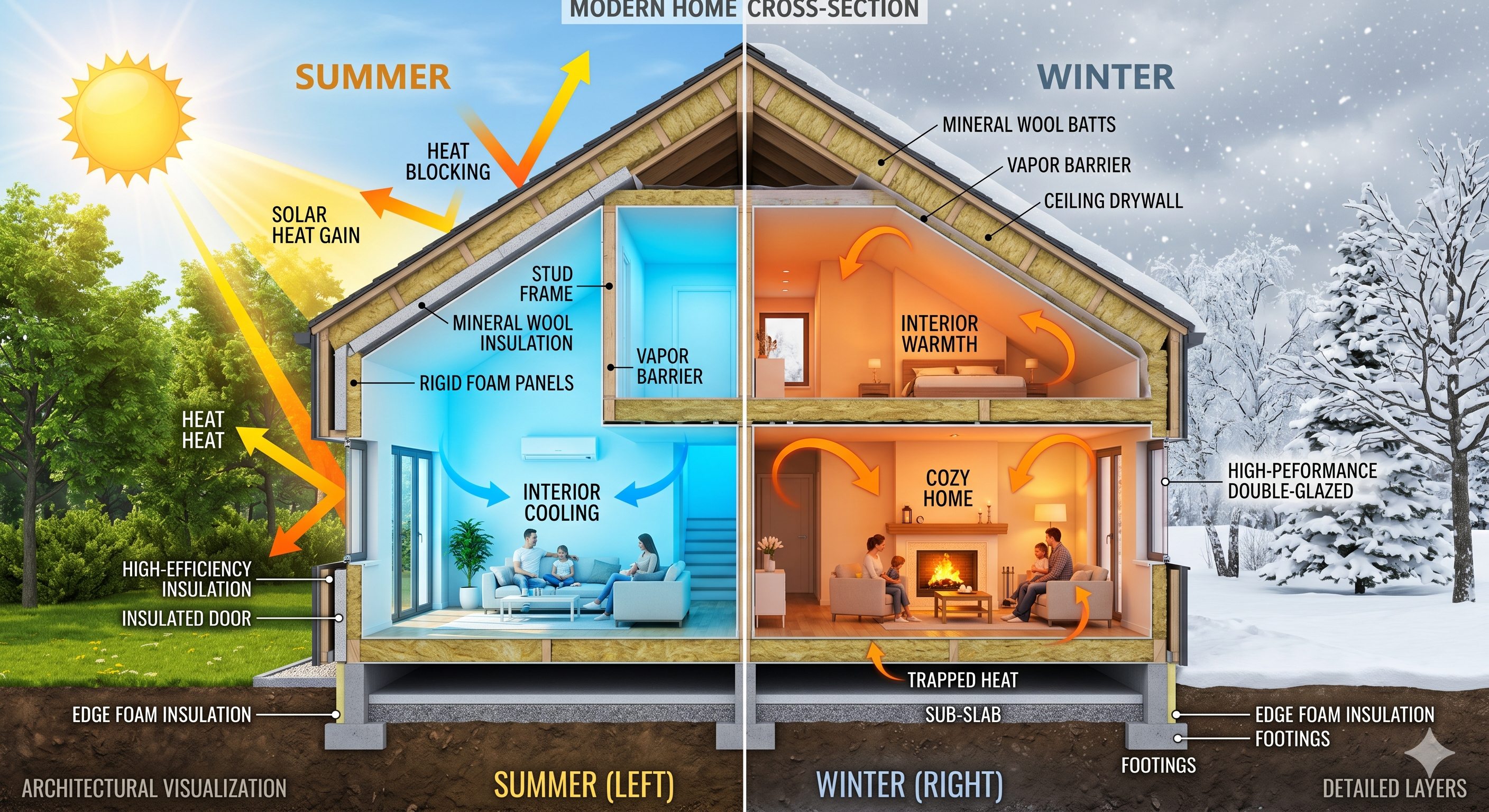
Aislación térmica: el techo que no se ve pero que más impacta
La mayor parte de la pérdida de calor en invierno y de la ganancia de calor en verano se produce a través del techo. Estudios de eficiencia energética en viviendas del Cono Sur indican que el techo sin aislación puede representar hasta el 30–40% de las pérdidas térmicas totales del edificio. Aislar el techo es, por lo tanto, la intervención con mayor retorno de inversión en eficiencia energética.
Las principales soluciones de aislación de techo son:
- Planchas de poliestireno expandido (EPS): económico, fácil de colocar, buen rendimiento R. Se coloca sobre la losa (extradós) o suspendido bajo las correas (intradós).
- Planchas de poliisocianurato (PIR) o poliuretano (PUR): el doble de rendimiento térmico que el EPS con el mismo espesor. Ideal cuando el espacio disponible es limitado.
- Lana de vidrio o lana de roca: en rollos o planchas, se coloca entre las vigas o correas. Excelente aislación acústica adicional. Requiere barrera de vapor en climas húmedos.
- Membranas reflectivas aluminizadas: funcionan por reflexión de la radiación infrarroja. Muy efectivas en climas calurosos. Se colocan con cámara de aire para máxima eficiencia.
Un techo plano sin correcta impermeabilización es una de las principales causas de daño estructural en viviendas. La humedad que ingresa por fisuras en la membrana puede llegar a la armadura del hormigón, generar oxidación y reducir la vida útil de la estructura. Invertí en una membrana de calidad (mínimo 4 mm, marca reconocida) y controlá especialmente las juntas, los bordes de parapeto y los perímetros de caños y chimeneas. El ahorro en una membrana barata nunca compensa el costo de una reparación estructural.
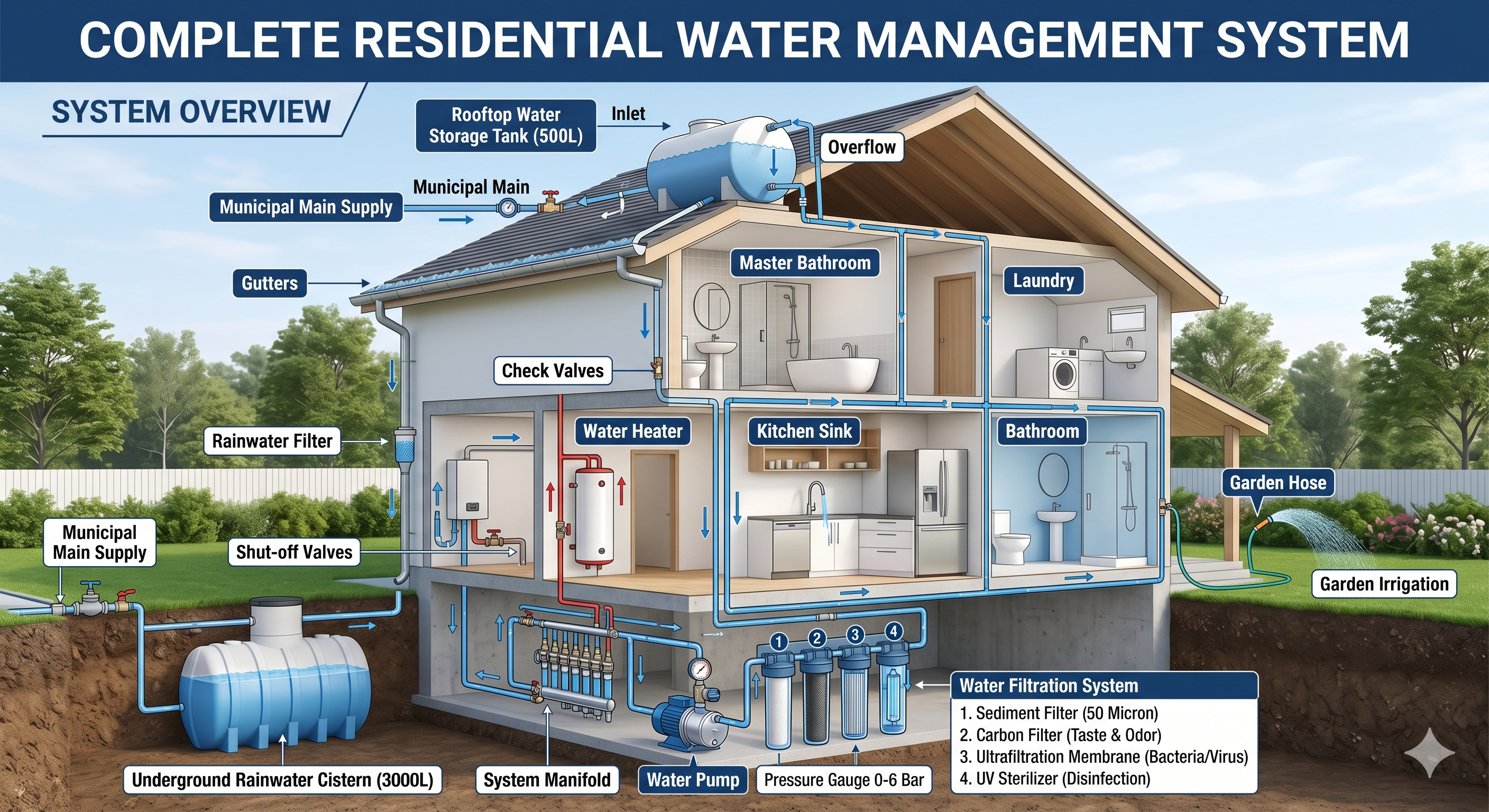
Canaletas y sistema de desagüe
Un techo bien diseñado y bien construido puede arruinarse si el sistema de desagüe no está correctamente dimensionado. Las canaletas recogen el agua que escurre por los planos del techo y la canalizan hacia los caños de bajada. Si están subdimensionadas, el agua se desborda y puede infiltrarse en las paredes exteriores o en los cimientos.
Los tipos principales de canaleta son: aluminio, PVC (las más económicas y livianas), zinc natural (duración superior a 50 años, esteticamente excelentes) y acero inoxidable (para usos específicos de alta exigencia). El cálculo del ancho de la canaleta y el diámetro del caño de bajada depende de la superficie de techo que drenan y de la intensidad de lluvia de la zona. Una regla práctica es no superar 50 m² de techo por caño de bajada de 75 mm de diámetro en zonas de lluvia moderada.
Costos orientativos completos
| Tipo de techo | Material / m² | Mano de obra / m² | Total estimado / m² |
|---|---|---|---|
| Teja cerámica (a dos aguas) | $20–40 | $15–25 | $35–65 |
| Teja hormigón (a dos aguas) | $15–30 | $12–22 | $27–52 |
| Chapa ondulada simple | $8–20 | $8–14 | $16–34 |
| Chapa sándwich / isopanel | $25–55 | $10–18 | $35–73 |
| Techo plano con membrana | $8–18 (losa) + $12–25 (membrana) | $20–35 | $40–78 |
| Shingles asfálticos | $18–35 | $12–20 | $30–55 |
| Techo verde extensivo | $50–120 (sustrato + plantas) | $30–80 | $80–200 |
| Pizarra natural | $60–150 | $25–40 | $85–190 |
¿Qué techo elegir según tu zona climática?
El clima es el factor que más debe condicionar la elección del techo. Un techo perfecto para el Altiplano boliviano puede ser completamente inadecuado para la costa del Pacífico chileno o para la Patagonia argentina.
Clima caluroso y seco (NOA, Cuyo, zonas áridas)
La prioridad es bloquear la radiación solar. Un techo con buena masa térmica (tejas cerámicas o de hormigón) o con alta reflectividad (chapas pintadas de blanco, membranas aluminizadas) combinado con aislación interna es la mejor opción. El techo plano puede funcionar bien por la poca lluvia, pero requiere impermeabilización de calidad para resistir la dilatación térmica.
Clima frío y/o con nieve (Patagonia, Andes, sur de Chile)
Se necesita una pendiente pronunciada (mínimo 40–45% para tejas, 20% para chapas) para que la nieve resbale sin acumularse. La aislación térmica es crítica. Las tejas de pizarra, los shingles y los paneles sándwich son excelentes opciones. Evitar techos planos salvo con estructura especial para carga de nieve.
Clima húmedo con lluvias frecuentes (litoral, NEA, costa atlántica)
La estanqueidad es la prioridad número uno. Pendientes generosas, solapes amplios y materiales resistentes al agua y al crecimiento de hongos y líquenes. Las tejas cerámicas esmaltadas o las chapas con tratamiento anticorrosivo son las más recomendadas. Evitar materiales porosos sin tratamiento.
Zona costera con viento intenso
Los techos a cuatro aguas tienen ventaja frente al viento en los cuatro frentes. Las tejas deben estar ancladas con ganchos metálicos además de la colocación estándar. Los paneles sándwich con fijaciones especiales son también una buena opción. Evitar techos a un agua si el lado de descarga enfrenta la dirección del viento predominante.
Antes de definir el tipo y material de tu techo, es fundamental tener el plano de la planta completamente definido. La forma del techo debe coordinarse con la distribución interior: las vigas maestras del techo coinciden con las paredes portantes, y cualquier cambio en la planta después de construir la cubierta puede ser costoso. Con ArqPlano podés diseñar la planta completa y verificar que las dimensiones y la posición de los muros sean coherentes con el sistema de cubierta que planeás usar.
Conclusión: invertí en el techo desde el comienzo
El techo es uno de los elementos que más impacta en la durabilidad, el confort y el valor de reventa de una vivienda. La tentación de reducir el presupuesto en la cubierta es comprensible, pero casi siempre resulta más costoso en el mediano plazo. Una gotera que parece menor puede arruinar un cielo raso nuevo, dañar instalaciones eléctricas o generar problemas de salud por la proliferación de hongos.
La buena noticia es que los materiales de cubierta de calidad no son los más costosos del mercado. Con una teja cerámica estándar, una buena estructura de madera tratada y un sistema de canaletas adecuado, podés tener un techo que dure 40–50 años sin mayores intervenciones. El secreto está en la calidad de la ejecución y en elegir el sistema adecuado para tu clima y tipo de proyecto.